
Presupuesto para Singapur: cuánto cuesta viajar y cómo organizarte
Singapore can feel expensive because it is clean, safe, iconic and hotel prices are often higher than in many Southeast Asian destinations. Still, it does not have to become excessive if travelers choose the right area, group visits by district and use public transport well. The city rewards planning: in one day, a traveler can move from Marina Bay to Chinatown, eat at a hawker centre and enjoy the night skyline without wasting much time.
The budget should be read as the budget of a modern city. Hotels are the largest item, tickets need selection, food can be very flexible and MRT travel saves a lot. A good plan does not try to see every famous place; it chooses the experiences that deserve the available days.
Why Singapore needs careful budgeting
Singapore is small on the map, but costs deserve attention. Distances are manageable and the MRT works well, yet hotel rates, some tickets and iconic experiences can rise quickly. With only two or three nights, choosing what to pay for becomes even more important. The city suits a compact, intelligent plan with enough rest.
Hotels shape the feeling of the trip
Accommodation usually takes the largest share of the Singapore budget. A clean hotel near MRT often saves more energy than a larger room far from the main line.
Families should prioritize convenience, food nearby and easy returns for rest. Couples may prefer a small hotel in a pleasant district instead of paying for a very high category.
From hawker centres to special restaurants
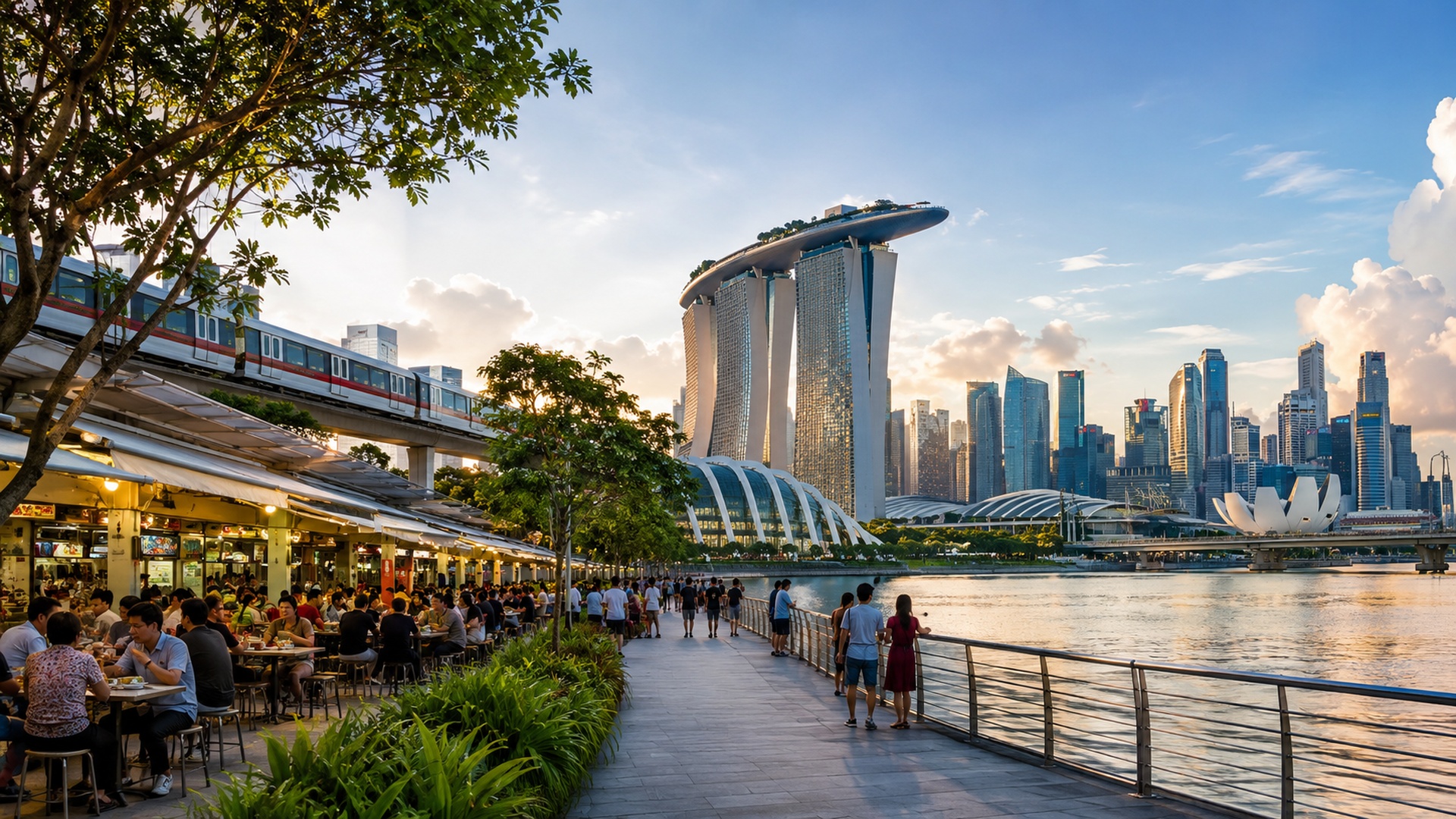
Hawker centres are one of Singapore’s best advantages. Chicken rice, laksa, satay, noodles, Indian food and Chinese dishes can be enjoyed at reasonable prices with real local character.
Special restaurants should be chosen intentionally, perhaps one dinner with a bay view or a memorable place in a heritage district. Eating in expensive malls every day pushes the budget up.
Drinks, coffee and desserts also deserve a daily allowance. Singapore has many tempting stops, and small amounts repeat quickly.
The smartest balance is using hawker centres for many meals and keeping one beautiful dinner as a highlight.
Tickets and iconic experiences
Gardens by the Bay, Marina Bay Sands, Sentosa, museums and family attractions all have appeal. Tickets should follow interests, not a long checklist.
For a short stay, one strong iconic area and one experience for the group are enough. Children may prefer Sentosa or the aquarium; adults may enjoy architecture, gardens and dining.
Free spaces also matter: walking around Marina Bay, watching the evening lights or exploring Chinatown and Little India. Singapore is not only inside ticketed attractions.
How to organize costs without losing the city
Controlling Singapore costs does not mean removing all experiences. The city works best when each half day focuses on one district, meals are placed near visits and movements avoid loops. When hotel, tickets, meals and MRT follow the same map, money is used with less waste.
Area, transport card and district planning
A hotel near MRT makes each day easier. Bugis, City Hall, Chinatown and Orchard each have different strengths, but all should connect well with the main plan.
A transport card or contactless payment simplifies MRT and bus rides. Travelers avoid single tickets and can adapt quickly in rain.
District grouping matters: Marina Bay with Gardens by the Bay, Chinatown with the river area, Little India with Kampong Glam for color and culture.
This approach reduces taxis and increases resting time, making it one of the most comfortable ways to save.
What to book early
Hotels should be booked early for weekends, events and busy periods. Conferences and exhibitions can change rates quickly.
Some attractions also deserve advance planning to secure time slots, especially for families or groups avoiding long queues.
Budget styles: modest, balanced and premium
A modest trip can use a compact hotel near MRT, hawker food, walking routes and few paid attractions. The focus is a clean, safe and easy city.
A balanced trip adds a better hotel, some restaurants, Gardens by the Bay or Sentosa. It fits travelers wanting highlights without going too high.
A premium trip may include an iconic hotel, fine dining, some private transfers and tailored experiences. Even then, walking remains essential because public spaces are part of Singapore’s charm.
FAQ
Is Singapore expensive?
Yes, especially hotels and some tickets, but food and transport can be managed well.
Where can I save?
Hawker centres, MRT, district planning and selective ticket choices help a lot.
Which area is convenient?
Choose a district near MRT that matches the plan, such as Bugis, City Hall, Chinatown or Orchard.
Should I buy many attraction tickets?
No. Select tickets according to interests and the number of days.
Singapore gives value when travelers read it as a smart city map. A well-located hotel, MRT use, hawker meals and a few selected icons can create a clear trip without making the budget heavy. It does not need a packed schedule; it needs the right district, the right timing and spending on moments that truly make the city shine.