
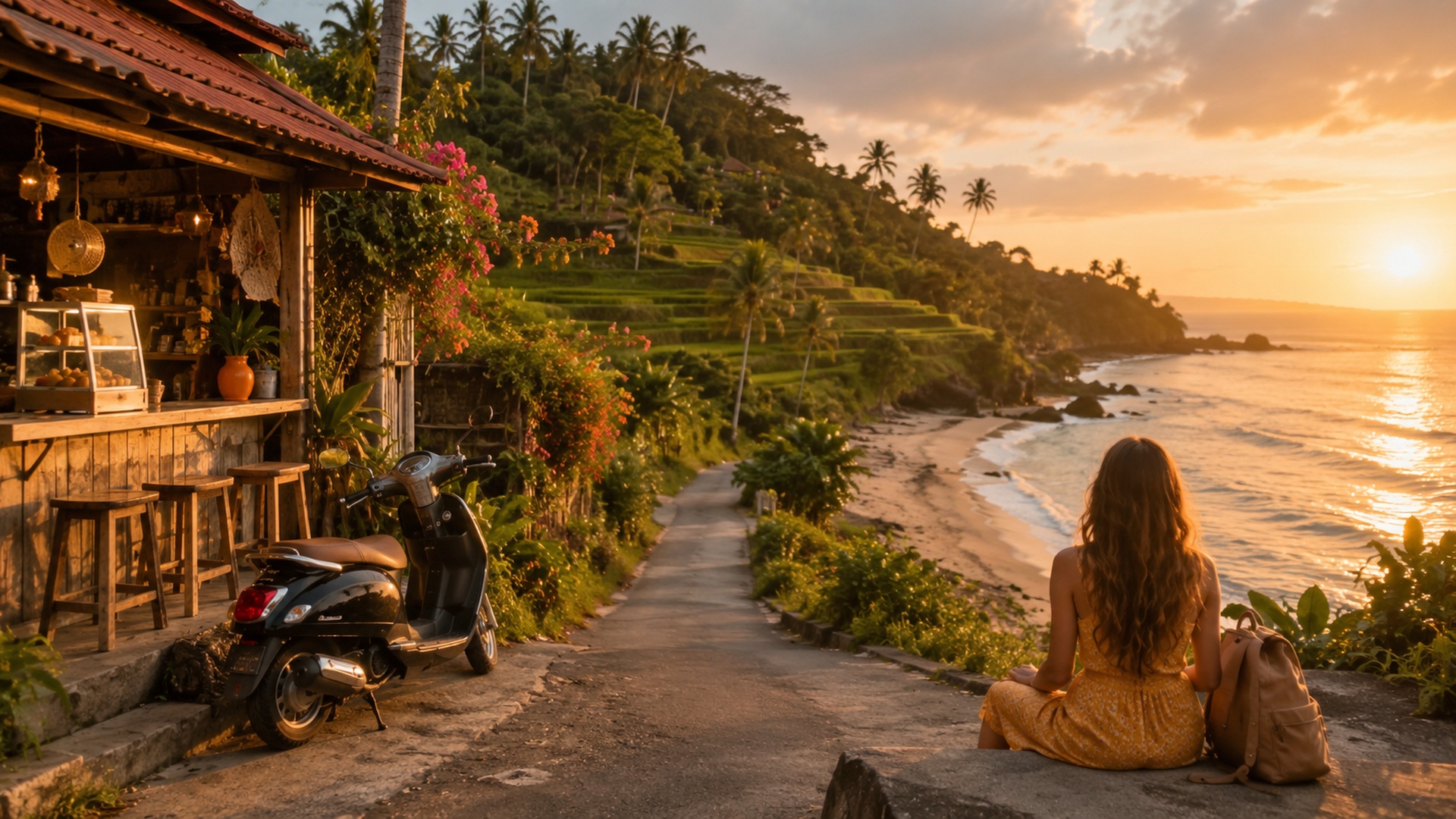
Presupuesto para Bali: cuánto cuesta viajar a la isla
The budget for Bali changes a lot depending on where you stay, the season and the kind of trip you want. A traveler based in a small villa in Ubud, eating local food and using a driver for selected days will spend very differently from someone choosing a beach resort, beach clubs, spa treatments and sunset dinners. For that reason, “how much does Bali cost” should not be answered with one fixed number. The first step is to define the style of the trip.
Bali is not necessarily the most expensive destination in Southeast Asia, but small expenses appear easily. Short taxis, photogenic cafes, temple tickets, tips, laundry, SIM cards, sunrise tours and beach clubs can add up. A good budget protects the experiences that create memories: the right area, sensible transport, a few meals with atmosphere and enough time to rest.
Main costs when traveling to Bali
Bali has many price levels, from simple guesthouses to private resorts and from family warungs to restaurants facing the sunset. Costs are easier to understand when divided into accommodation, food, transport and experiences. This gives a clearer picture of where to invest and where to stay flexible. Looking only at hotel or flight prices is not enough because each area of Bali has its own movement patterns and daily spending habits.
How accommodation area changes the budget
Ubud suits travelers looking for greenery, yoga, spa, rice terraces and culture. Prices vary widely; a forest villa can cost more than a mid-range beach hotel, but it offers a deeper sense of retreat. Staying only one night often makes it difficult to enjoy Ubud properly.
Seminyak and Canggu work for cafes, restaurants, small shops and a younger atmosphere. Spending tends to rise because travelers go out several times a day. A hotel close to food and cafes can save more than a cheaper room hidden far from the main streets.
Nusa Dua leans toward resorts, calmer beaches and stable service, which suits families or travelers wanting rest. Rooms can be more expensive, yet the daily plan may cost less because many services are inside the resort.
To save money, reducing hotel changes is often smarter than booking far away. Every move takes a car, packing time and energy. Staying in the right area for two or three nights usually feels better than chasing too many photo stops.
Food, cafes, beach clubs and daily spending
Food in Bali can be affordable in local warungs, but brunch spots, seaside restaurants and beach clubs raise the average quickly. Mixing local meals with a few special meals keeps the trip varied without pushing the budget too hard.
Coffee and drinks are easy to underestimate. A morning in Canggu or Seminyak can include coffee, juice, cake and a short ride. Over several days, that becomes a real expense, so a daily allowance helps.
Beach clubs should match the purpose of the day. Some are best for sunset, others for swimming or music. One well-chosen place is usually better than rushing through several venues.
Private car, ride apps and movement between areas
Bali has no urban train system, so private drivers and ride apps matter. A short distance on the map can take longer than expected because roads are narrow and traffic changes by hour.
A private car works well for temples, waterfalls, rice terraces and distant areas. Ride apps are useful for short local trips. Families often get more value from a car because stops, luggage and rest can be managed comfortably.
How to spend better on the island
A good Bali trip is not defined by spending more, but by placing the budget in the right moments. Some days deserve a reliable car and local guidance; other days need only hotel time, a nearby beach and a simple dinner. Bali feels better when the plan is not stretched too far. If the budget follows the area and the energy of the traveler, the island offers more emotion without requiring more activities.
Where to invest in Ubud, beaches and temples
In Ubud, worthwhile spending often goes to a beautiful villa, spa, cooking class, market visit or rice terrace outing at a quieter hour. Visiting fewer temples with more time usually feels deeper than filling the day.
At the beach, hotel convenience and one memorable sunset can matter more than many extras. Nusa Dua or Sanur may suit calm travelers, while Canggu offers cafes and surf energy but requires patience with traffic.
For temples, timing matters. Tanah Lot, Uluwatu and Tirta Empul each have a different character. Good light, respectful clothing and a calm schedule make the visit more valuable.
Costs that can be reduced
Travelers can save by eating local food more often, choosing a small but well-located hotel, reducing beach clubs and skipping places famous only on social media. These cuts do not hurt much if the trip already has clear highlights.
It is less wise to save by removing rest time or choosing uncomfortable transport for long days. Bali is humid and traffic can be tiring; fatigue can flatten even a beautiful plan.
Extra budget, tips and flexible activities
A reserve should cover SIM cards, laundry, tips, water, rainy-day taxis, basic medicine and small changes caused by weather. Bali often presents attractive options once travelers are already there.
In high season, hotel and car prices may rise. Sunrise tours, surf lessons and special dinners are better reserved early. Booking ahead protects key moments without closing the whole itinerary.
Families should allow more margin because transport, food and breaks cost more. Couples may prefer to reserve extra for spa or a private dinner. Friends should agree on a shared fund for cars and activities.
Rutas Asia can shape a Bali budget around the way each group actually travels: restful, active or balanced. When the budget follows the style, the island feels smoother and more memorable.
FAQ
Is Bali expensive?
Bali offers many price levels. Costs rise with beach resorts, beach clubs, private cars and high season.
Where should I stay to save money?
A small hotel in the right area can be more efficient than a cheap room far away.
Do I need a private driver?
A private driver is useful for long sightseeing days and families. Ride apps work better for short local trips.
What extras should I prepare for?
SIM cards, tips, laundry, water, taxis, medicine, weather changes and optional activities.
Bali gives better value when travelers know what kind of island experience they want. A quiet trip does not spend like a cafe-and-beach-club trip. Families need convenience, while couples may prefer a villa, spa and private dinner. When the budget is divided by area, food, movement and experiences, the journey is easier to control. Bali does not need to be expensive to be beautiful, but money should support the moments that make the island feel generous and relaxed.